Nothing To Declare Items Hub
Know what packs into bags—and who carries them—before the queue gets weird.
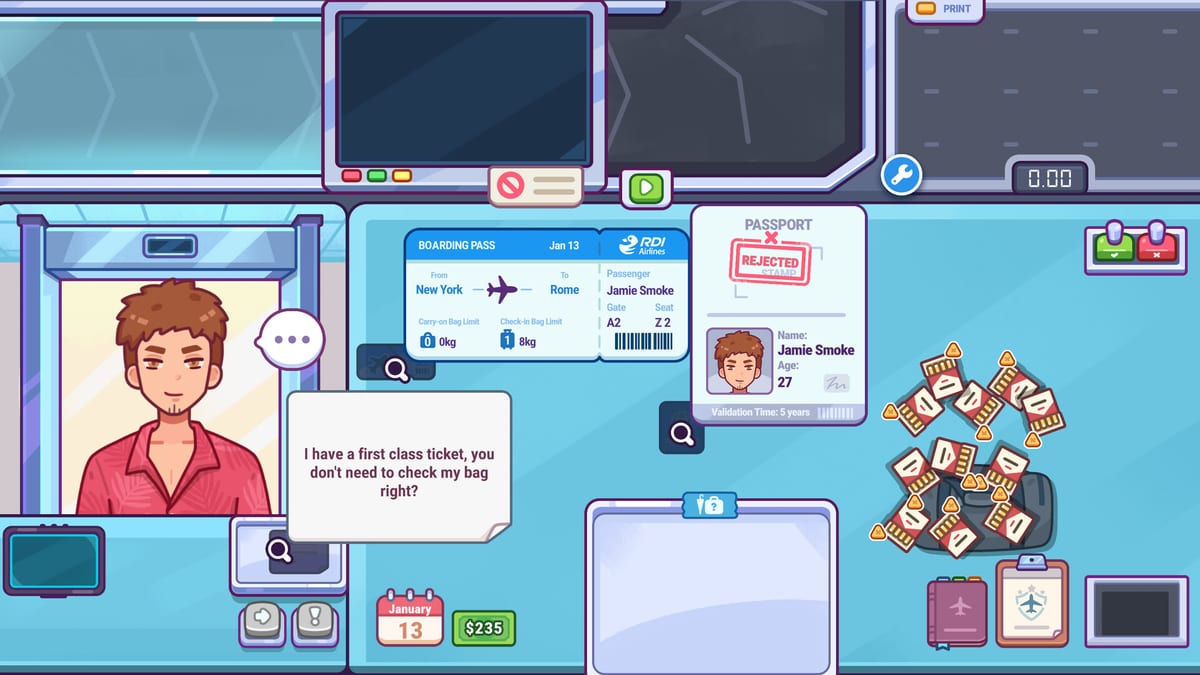
The Nothing To Declare items hub collects what you are actually looking for during a cozy security shift: suspicious packing patterns, danger-shaped objects, oddly shaped electronics, and the passenger types who bring them through your desk. Use these pages beside the mechanic guides so finds turn into faster recognition next shift.
Why an items hub matters
Guides teach process. Items pages teach targets. When an x-ray scan looks noisy, you need a mental catalog of what “wrong” can look like. When a luggage search finally opens, you need to know which objects deserve a hard stare. When dialogue gets slippery, traveler archetypes on the passengers page keep you from treating every joke as innocence.
Nothing To Declare is packed with Lost But Found universe flavor. That means luggage can feel like a crossover souvenir drawer. Enjoy the recognition, then still evaluate density, wiring, and story fit.
Start with these pages
- Contraband & Suspicious Items — danger patterns, weird electronics, and what deserves escalation.
- Passengers — traveler archetypes, attitude tells, and how stories should match bags.
Come back to this hub whenever a shift introduces a packing style you have not cataloged yet.
How to study items without spoiling the fun
You do not need a spoiler spreadsheet of every object. You need categories:
- Soft filler that usually explains weight (clothes, plush, paper goods).
- Normal travel tech that still deserves a silhouette check.
- Dense or sealed objects that demand interview or search.
- Joke-shaped electronics that might be harmless—or might not.
- Explicit threat shapes that should almost never be cleared on vibes.
Practice by pairing this hub with live play. After each search, glance at contraband and name the category you found. After each odd conversation, check passengers and tag the archetype. That two-minute review beats rereading walls of text.
Connect items to the rest of the wiki
Process pages that make items useful:
- How to Play and First Shift Tips
- Bag Weighing, X-Ray Scanning, Passenger Interviews, Luggage Search
- Shift Checklist for in-shift discipline
- Upgrades hub because cleaner finds fund better tools
- Controls, Review, Updates, Official Links
A simple recognition workout
Run one shift where your only study goal is item categories. Ignore upgrade shopping. When you clear a bag, guess what filled the weight. When you search, say the category before you click the object. Compare your guess to reality. In a few shifts, noisy x-rays become less mystical because your brain already has shelves for what it is seeing.
If launch patches add new inspection toys—documents, drug checks, cameras, or helper characters mentioned in developer updates—return here and extend your categories instead of memorizing rumors. Track official changes via Updates and Steam destinations on Official Links.
Items knowledge turns cozy chaos into readable patterns. Browse the pages above, then get back on the desk.
Building a personal item notebook
You do not need a public spoiler database to improve. Keep a private three-column note while you play:
- Seen shape — what the x-ray suggested
- Found object — what the search revealed
- Story fit — whether the passenger could explain it
After two or three shifts, patterns emerge: which dense blobs are usually chargers, which assemblies are never innocent, which joke electronics still deserve a question. That notebook turns the contraband page into something lived rather than theoretical.
Teaching new players with items
If a friend joins Nothing To Declare, do not dump every threat on them. Send them How to Play, then tell them to open this hub only when a find confuses them. Over-teaching item lists creates paranoia searches. Under-teaching creates lazy clears. The healthy middle is category literacy plus process discipline from the Shift Checklist.
As Rogue Duck expands the airport fantasy—more documents, specialized checks, new passenger pressures—your categories should expand too. Recheck Updates after patches, then add a line to your notebook instead of assuming yesterday’s safe souvenir is still today’s safe souvenir.
Frequently Asked Questions
Quick answers to the most common questions.
What does the Nothing To Declare items hub cover?
Suspicious item patterns and passenger types—targets for your weighing, scanning, interview, and search decisions.
Should I memorize every object?
No. Learn categories: filler, normal tech, dense anomalies, weird electronics, and clear threat shapes.
How do Lost But Found items fit in?
They add universe flavor inside luggage. Recognize them, then still judge density and story fit.
Which page should I open during a live shift?
Contraband for object patterns, Passengers for traveler tells, plus the Shift Checklist for process.
Do items pages replace the guides?
No. Guides teach when to escalate. Items pages teach what you are escalating toward.