Nothing To Declare Luggage Search
Unzip carefully, poke around, and confirm what the scan only hinted at.
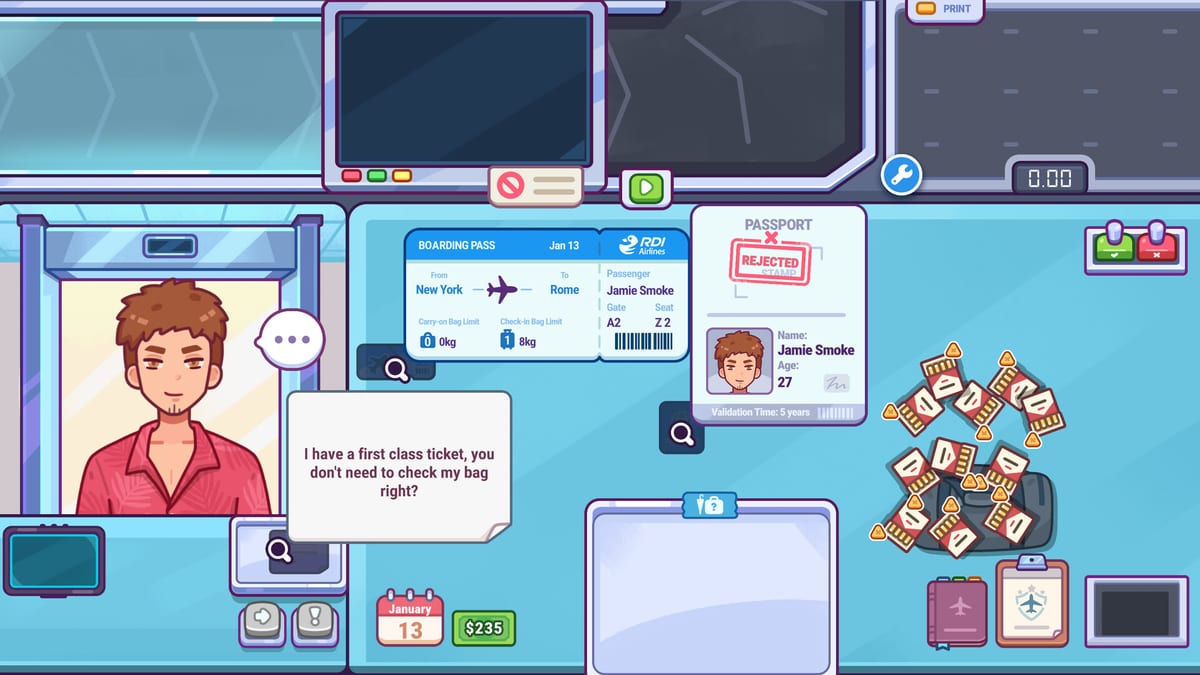
Luggage searching is the confirmation mini-game in Nothing To Declare. When weighing, x-ray layers, and interviews still leave you uneasy—or when a silhouette looks dangerous—you unzip the bag and examine items one by one. This guide covers when to search, how to work the cozy poke-around interaction, and how to avoid turning every suitcase into a time sink.
When searching is the right call
Search when evidence converges:
- Bag weighing says the suitcase is too heavy or oddly dense for the story.
- X-ray scanning shows threat-shaped hardware or unexplained electronics.
- Passenger interviews fail consistency checks.
- Your gut and the tools agree that clearing would be reckless.
Do not search only because you are bored or scared. Unnecessary searches slow the queue and can ding performance if you manhandle an innocent traveler’s life without cause. The How to Play loop treats search as escalation, not default.
How the mini-game feels
Searching is tactile and playful: unzip, move items, inspect odd shapes, and decide what matters. Bombs and dangerous objects are the headline threats, but oddly shaped electronics are the signature trick—sometimes silly, sometimes serious. Lost But Found universe packing makes the bag feel like a treasure chest of callbacks, which is delightful until one collectible silhouette hides a real problem.
Work methodically:
- Open the bag and establish a visual inventory.
- Separate soft filler from hard objects.
- Inspect anything dense, wired, sealed, or shape-weird.
- Compare finds to the passenger story and your earlier scan notes.
- Resolve the case, then reset your brain for the next traveler.
Keep Contraband & Suspicious Items handy so you recognize recurring danger patterns faster.
Search quality over search quantity
A careful search on the right bag beats five panic searches on clean tourists. Use the Shift Checklist mid-shift to confirm you earned the unzip with prior steps. If you skipped weighing or skimmed the x-ray, you are gambling.
When you do find something, note whether it was predictable from the scan. That feedback loop is how you get better at x-ray reading without opening every case.
Penalties, payouts, and upgrades
Catching a real threat protects your grade and income. Missing one after weak process hurts. False drama can also cost you. Treat search outcomes as economic events—then reinvest through Earning Money and Workstation Upgrades.
If searches feel clumsy because UI pacing fights you, review Controls. If early-game nerves make you over-search, reset with First Shift Tips.
Practical drills
Play a shift where you may only search bags that fail at least two prior checks. Track how often those searches pay off. Next shift, allow one “instinct search” and compare results. Most players discover that dual-signal rules outperform vibes.
Another drill: after each search, write one sentence—“I opened because weight and wiring disagreed with the interview.” If you cannot finish the sentence, you probably opened too early.
Related wiki routes
- Guides hub for sibling mechanics.
- Items hub and Passengers for who packs what.
- Upgrades hub for long-term desk power.
- Review for expectations about difficulty and tone.
- Updates if patch notes change inspection rules.
- Official Links for Steam community finds.
Unzip with purpose. Poke with patience. Clear the innocent quickly, and never apologize to a bomb for taking a closer look.
Search etiquette inside a cozy game
Even though Nothing To Declare is playful, treat the unzip like a serious confirmation tool. Move items with intent. Do not thrash the bag UI hoping a threat highlights itself. Soft filler gets sorted so hard objects become obvious. Weird electronics get an explicit look every time, because that is the game’s favorite trick and the Lost But Found universe’s favorite joke category.
If you find something dangerous, connect it backward: which earlier clue should have raised the flag? That retrospective is how searches train better scans. If you find nothing, connect it backward too: which clue was weak enough that you should have interviewed longer instead of opening?
Time budget for searches
A good search is thorough, not eternal. Give yourself a personal budget: inventory, separate, inspect anomalies, decide. If you are still poking empty corners because you are anxious, you are paying a hidden throughput tax. Confidence comes from contraband pattern study and from trusting dual-signal rules, not from endlessly re-checking socks.
When the airport grows and patches add more inspection toys, searches may sit beside cameras, documents, or helper characters. Until those systems are in your build, master the unzip you have. Track expansions on Updates and verify details through Official Links.
Frequently Asked Questions
Quick answers to the most common questions.
When should I search luggage in Nothing To Declare?
Search when two or more clues conflict, or when a scan clearly shows danger-shaped or unexplained dense items.
What am I looking for during a search?
Dangerous items, bombs, and oddly shaped electronics that do not match the passenger story—plus anything dense or wired.
Does searching every bag help?
No. Over-searching wastes time and can hurt performance. Escalate with evidence.
How does luggage search connect to money?
Correct finds protect your grade and earnings; misses and reckless searches create penalties that slow upgrades.
Are Lost But Found items always safe?
No. Universe cameos are fun, but odd electronics still deserve inspection when signals look wrong.